How to reduce patient no-shows: what actually works
Outpatient no-show rates run 20-30% in published studies; reminder sequences cut them by a fifth to a third. The clinic playbook, step by step.
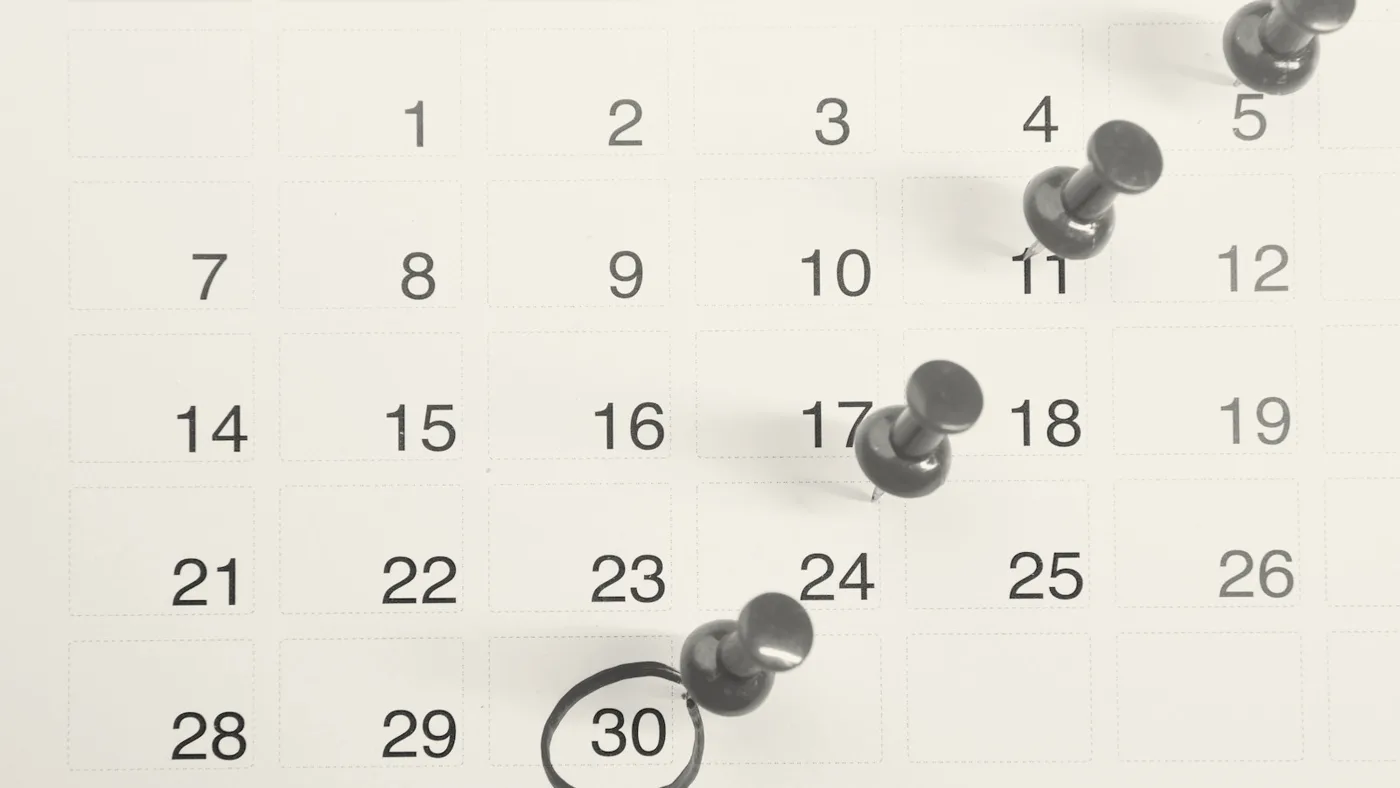
- Published outpatient studies put no-show rates at 20-30%. For a 20-visit day, that is four to six empty slots you already paid staff to fill.
- Reminder sequences work: across studies, they cut no-shows by roughly a fifth to a third. One message at booking does not.
- The sequence that shows up again and again: 72 hours, 24 hours, and 2 hours before the visit, with a reschedule option in the message.
- In India, WhatsApp beats SMS — it is where your patients already reply.
- AI helps with the drafting and the queueing. It does not fix a scheduling policy that overbooks Mondays.
Every clinic owner knows the shape of the problem: the 11:30 slot that never showed, the follow-up that never got booked, the front desk calling numbers that don't pick up. What is less known is how well-studied this problem is — and how consistent the fixes are.
What an empty slot actually costs
Do the arithmetic for your own clinic once and the problem stops being abstract. A doctor seeing 20 patients a day at an average ₹600 consultation, with a 25% no-show rate, loses five visits a day. That is ₹3,000 a day, roughly ₹75,000 a month — before counting the follow-up revenue, the lab work, and the pharmacy sales attached to those visits. The rent, the receptionist, and the doctor's time were already paid for.
And the cost is not only money. A no-show is often a patient whose condition goes unmanaged until it gets worse. Missed follow-ups are a clinical problem wearing an operational costume.
What the research says
No-shows are one of the most-studied problems in outpatient operations, and the numbers are fairly stable across countries:
- Baseline rates. Systematic reviews of outpatient clinics put average no-show rates around 20-30%, with some specialties (mental health, paediatrics) running higher and established primary-care panels running lower.
- Reminders work. Across randomized and observational studies, reminder systems reduce no-shows by roughly 20-38% relative to no reminder. One US paediatric clinic study saw no-shows fall from 38% to 23% after adding automated reminders.
- Sequences beat single messages. The strongest results come from two to three touches — commonly 72 hours, 24 hours, and 2 hours before the visit — not one SMS fired at booking time.
- Patients prefer it. In preference surveys, phone and text messages are the reminder channels patients actually choose, by a wide margin.
In short: this is not a mystery. It is an execution problem.
Why reminders fail in real clinics
If the fix is this well documented, why do most small clinics still run 25% no-show rates? Because the standard implementation is a human with a phone and a spare hour that never comes.
- Manual calling does not scale. Thirty appointments tomorrow means thirty calls today, made by the same person who is checking patients in. It gets skipped on exactly the busy days when it matters most.
- One reminder at booking is not a sequence. A message sent five days early is forgotten by visit day. The research result is about timing, not existence.
- No reschedule path. A reminder that says "you have an appointment" without a way to say "actually, can we move it?" converts a silent no-show into — a silent no-show. The reminder must carry the exit.
- Wrong channel. SMS inboxes in India are where OTPs and loan spam live. WhatsApp is where humans reply.
- Nobody owns the number. Most clinics cannot tell you their no-show rate for last week. What is not measured quietly stays at 25%.
The playbook
1. Remind in sequence, not once
Three touches: 72 hours out (early enough to reschedule), 24 hours out (plan the day), 2 hours out (leave now). Each message names the doctor, the time, and the location. This alone captures most of the published improvement.
2. Put confirm and reschedule inside the message
The goal is not "remind them" — it is "get a signal". A reply of yes lets you protect the slot. A reschedule request three days early is a slot saved, not lost. Silence after two touches tells you which slots to offer to the waitlist.
3. Use WhatsApp, and write like a human
In India this is not optional. A WhatsApp message from the clinic's named number, in the patient's language, reading like the front desk wrote it, outperforms a shortcode SMS in both delivery and replies. Keep templates warm and short; nobody confirms an appointment through a wall of terms and conditions.
4. Adopt a confirm-or-release policy
Decide in advance what happens to unconfirmed slots. A common shape: if there is no confirmation by the 24-hour reminder, the front desk calls once; if there is still no answer, the slot is offered to the waitlist or kept for walk-ins. Write it down and apply it evenly.
5. Keep a recall list
No-shows are visits that were booked and missed. The bigger leak in many clinics is visits that were never booked: the diabetic patient due for a quarterly review, the post-procedure check that was "we'll call you". A weekly recall list — who is due, who was contacted, who booked — closes that loop.
6. Track one number weekly
No-shows as a percentage of booked visits, per week, per doctor. Put it where the owner sees it. Every intervention above becomes measurable the moment this number exists.
Where AI helps — and where it does not
Everything above can be run by hand. The reason it usually is not: it is 60-90 minutes of daily, interruptible, repetitive work sitting on your busiest employee. That profile — high volume, clear rules, low judgement per item — is exactly what AI-assisted operations are good at. The pattern that works in clinics is human-in-the-loop: the system drafts every reminder, follow-up, and recall message; the staff review a queue and approve; nothing reaches a patient on its own.
What AI does not fix: an overbooked Monday template, a doctor who runs 90 minutes late by noon (patients learn, then stop showing up on time), or fees that surprise patients at the desk. If your no-shows are driven by those, fix those first. An honest look at your own numbers usually tells you which problem you have.
How Xwits Health Care handles this
We build a clinic operating system called Xwits Health Care, and this playbook is built into it: appointment reminders and follow-up messages are drafted by AI, queued for front-desk approval, and sent over WhatsApp from your clinic's identity. Follow-up booking happens at check-out, recall lists come from the medical record, and the ops dashboard tracks the no-show number weekly. By design, no message reaches a patient without a human approving it.
That is the honest division of labour: the machine does the drafting and the remembering, your staff keep the judgement and the relationship.
What this means for you
- Measure your no-show rate this week. If it is under 10%, congratulations — spend your energy elsewhere.
- If it is 20%+, implement the three-touch reminder sequence with a reschedule path. This is the highest-yield single change, and the research behind it is solid.
- Move patient communication to WhatsApp with warm, named, short templates.
- Add a confirm-or-release policy and a weekly recall list once reminders are running.
- Automate the drafting and queueing when the manual version starts eating staff hours — with approval gates, not autonomous sending.
Running a clinic and want to talk through your no-show numbers? Book a 30-minute call. We will tell you honestly whether software is your problem — sometimes it is the Monday template.
Related from the blog
AI for clinics: AI scribes, patient WhatsApp, and the audit trail
Where AI helps a small clinic without crossing the clinical line. AI scribes, patient communication, triage, and what we deliberately do not automate.
Human-in-the-loop AI: where it matters, where it does not
Not every AI feature needs a human reviewer, and not every feature can survive without one. A decision guide based on cost of error, reversibility, and trust.
AI for ops teams: scheduling, dispatch, inventory
Ops teams have predictable patterns and irregular spikes. AI excels at the prediction part and supports the spike part. Five patterns from production.
Talk to a real engineer.
A 30-minute call. We will tell you honestly whether AI is the right fix and what it would take.